Tendonitis is a common condition affecting people of all ages, especially those involved in physical activity or repetitive tasks. In a fast-paced city like Dubai, where fitness culture and demanding routines are common, tendon-related injuries are frequently treated in clinics and physiotherapy centers. If you are searching for tendonitis treatment in Dubai, understanding your options can help you recover faster and prevent complications.
What Is Tendonitis?
Tendonitis (or tendinitis) is the inflammation or irritation of a tendon—the thick fibrous tissue connecting muscles to bones. It usually develops due to overuse, repetitive strain, or sudden injury.
- Shoulder (rotator cuff)
- Elbow (tennis/golfer’s elbow)
- Wrist and hand
- Knee (patellar tendon)
- Achilles tendon
If untreated, tendonitis can progress into chronic pain or tendon degeneration, making early treatment essential.
Symptoms of Tendonitis
- Localized pain and tenderness
- Swelling around the joint
- Morning stiffness
- Pain during movement
- Weakness in the affected area
- Creaking or grating sensation
Causes and Risk Factors
- Repetitive Movements: Typing, lifting, running
- Sports Activities: Tennis, football, gym workouts
- Poor Posture: Incorrect body mechanics
- Aging: Reduced tendon flexibility
- Medical Conditions: Diabetes, arthritis, obesity
Diagnosis in Dubai Clinics
Clinics in Dubai use advanced diagnostic tools to assess tendon injuries accurately:
- Physical examination
- Ultrasound imaging
- MRI scans (if required)
Treatment Options in Dubai
1. Rest and Activity Modification
Reducing strain on the affected tendon is the first step. Doctors may suggest braces, posture correction, and switching to low-impact activities.
2. Physiotherapy
A key part of recovery, physiotherapy includes stretching, strengthening exercises, manual therapy, and taping techniques to restore function.
3. Medications
Pain relief may include NSAIDs, topical gels, or limited steroid injections combined with therapy.
4. Shockwave Therapy (ESWT)
5. PRP Therapy
Platelet-Rich Plasma therapy uses your own blood components to naturally and effectively accelerate tendon healing.
6. Corticosteroid Injections
Used in severe cases for quick pain relief but applied cautiously to avoid long-term damage.
7. Surgery (Rare Cases)
Minimally invasive procedures may be required for chronic or severe tendon damage.
Recovery Timeline
- Mild: 2–4 weeks
- Moderate: 6–8 weeks
- Chronic: 3–6 months
Prevention Tips
- Warm up before exercise
- Maintain proper posture
- Avoid sudden activity increases
- Take breaks during repetitive work
- Strengthen supporting muscles
When to See a Specialist
Seek medical help if pain lasts more than a week, worsens, or affects daily activities. Early consultation ensures faster recovery.
Cost of Treatment in Dubai
| Service | Estimated Cost |
|---|---|
| Consultation | AED 300–800 |
| Physiotherapy | AED 250–600 |
| Shockwave Therapy | AED 300–700 |
| PRP Injection | AED 1500–3500 |
Conclusion
Tendonitis can impact your mobility and lifestyle if ignored, but with advanced medical care available, recovery is highly achievable. From physiotherapy and medications to innovative treatments like PRP and shockwave therapy, Dubai offers comprehensive solutions.
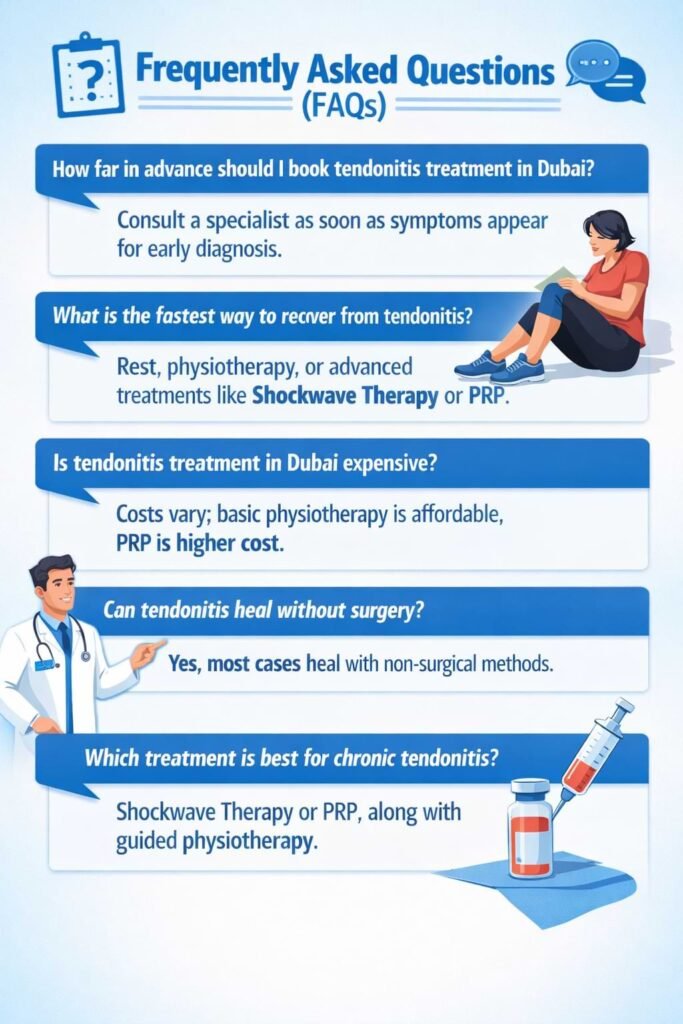
Frequently Asked Questions (FAQs)
How far in advance should I book tendonitis treatment in Dubai?
It’s best to consult a specialist as soon as symptoms appear. Early diagnosis helps prevent complications and reduces recovery time significantly.
What is the fastest way to recover from tendonitis?
A combination of rest, physiotherapy, and advanced treatments like shockwave therapy or PRP can speed up recovery. Following a structured rehab plan is essential.
Is tendonitis treatment in Dubai expensive?
Costs vary depending on treatment type. Basic physiotherapy is affordable, while advanced therapies like PRP may be more expensive but offer faster recovery.
Can tendonitis heal without surgery?
Yes, most cases heal with non-surgical treatments such as rest, physiotherapy, and medication. Surgery is only required in severe or chronic cases.
Which treatment is best for chronic tendonitis?
Chronic cases often respond well to shockwave therapy or PRP treatment, along with a guided physiotherapy program for long-term recovery.